For many years, Bitcoin was seen as something strange, risky, and even dangerous. For some people, Bitcoin is a scam. For others, Bitcoin is an investment and represents the future of money. But after all, is Bitcoin a scam or an investment? This question is far more common than it seems and, precisely for that reason, it must be answered with depth, responsibility, and high-quality information.
In this complete article, you will understand the myths and truths about Bitcoin, learn how it works in practice, why it generates such extreme opinions, and most importantly, how to separate real information from emotional misinformation. Because yes, investing in Bitcoin involves technology, economics, and human behavior.
So, take a deep breath, keep reading, and discover everything right now.
What Is Bitcoin and Why Does It Generate So Much Controversy
Before deciding whether Bitcoin is a scam or an investment, it is essential to understand what Bitcoin is. Bitcoin is a decentralized digital currency, created in 2009 by a developer (or group) under the pseudonym Satoshi Nakamoto. Unlike the dollar, euro, or any other fiat currency, Bitcoin is not controlled by governments, central banks, or financial institutions.
And that is exactly what creates so much controversy. After all, we have lived in a centralized financial system for centuries. Therefore, when a currency appears that does not depend on banks, operates 24 hours a day, and allows direct transactions between people, the shock is inevitable.
But then the question arises: if there is no bank behind it, is Bitcoin a scam? Or is this decentralization precisely what gives it value as an investment?
How Bitcoin Works in Practice
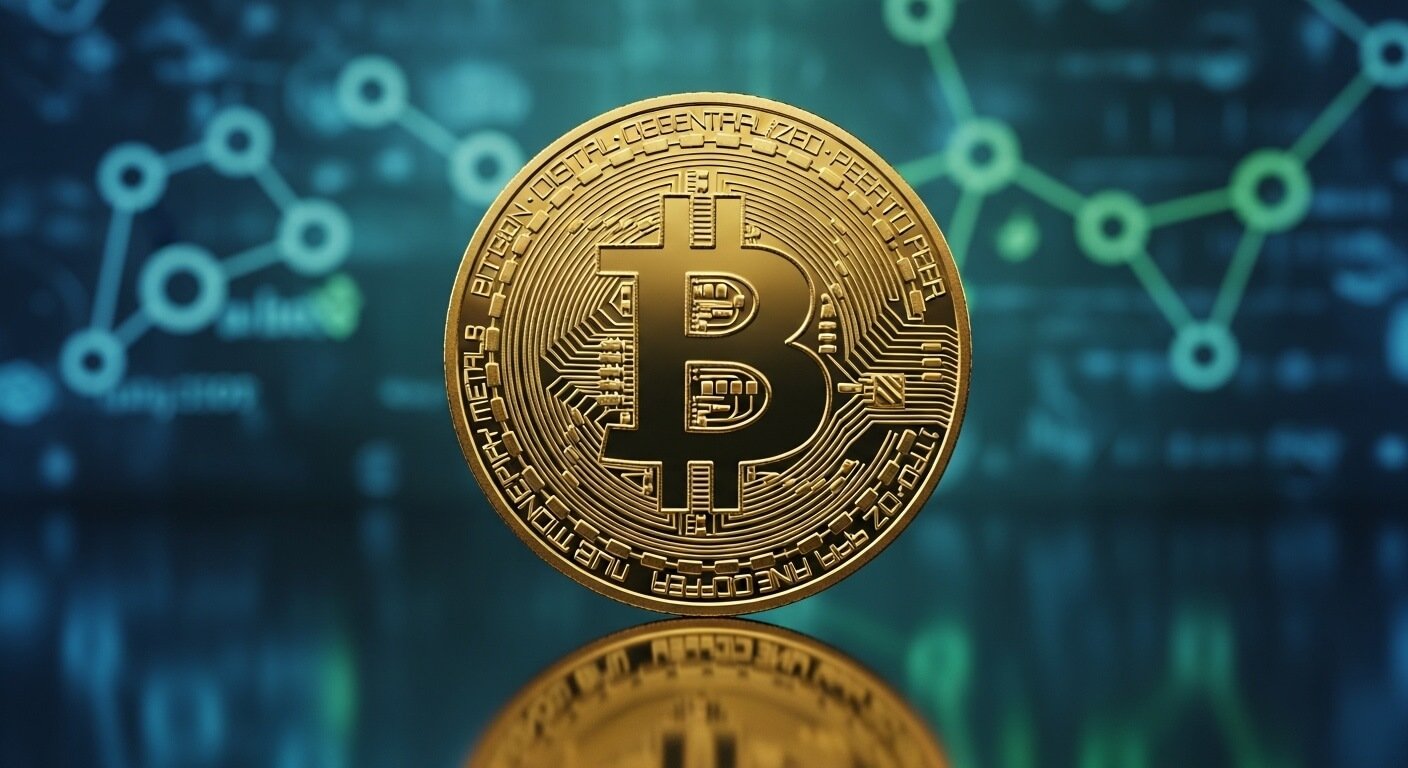
To understand whether Bitcoin is an investment or a scam, we need to look at how the technology behind it works. Bitcoin operates based on a technology called blockchain, which is nothing more than a public, transparent, and immutable record of transactions.
Every Bitcoin transaction is validated by thousands of computers spread around the world, known as nodes. These computers secure the network through complex mathematical calculations, a process known as mining.
In other words, there is no “owner” of Bitcoin. There is an entire network validating the information. And that changes everything. Because when something is transparent, auditable, and decentralized, it becomes much harder to be a scam.
So here we already arrive at an important truth: Bitcoin itself is not a scam. Scams may exist around Bitcoin, but not within the technology itself.
Why Many People Believe Bitcoin Is a Scam
Despite all the technology involved, many people still believe that Bitcoin is a scam. But why?
First, because Bitcoin challenges the traditional system. Anything that breaks the standard usually generates fear. In addition, many people were introduced to Bitcoin through unrealistic promises of fast profits, made by scammers who use the name of the cryptocurrency to deceive others.
And here is a crucial point: scams use Bitcoin, but that does not make Bitcoin a scam. Just as there are scams involving real estate, stocks, or traditional investments, there are also scams involving cryptocurrencies.
Therefore, confusing the tool with its misuse is a common — but dangerous — mistake.
Is Bitcoin an Investment or a Gamble?
Another frequent question is whether Bitcoin is an investment or a gamble. The answer depends entirely on how you approach it.
When someone buys Bitcoin without studying, without strategy, and just following promises of quick profits, it looks much more like a gamble. However, when Bitcoin is analyzed as a scarce asset, with economic, technological, and historical fundamentals, it clearly fits as a long-term investment.
Bitcoin has a maximum supply of 21 million units, which makes it scarce by nature. Unlike traditional currencies, which can be printed endlessly, Bitcoin cannot be artificially inflated.
So when you understand this, you realize that Bitcoin is not just speculation. It is a digital store of value for many people around the world.
The Most Common Myths About Bitcoin
Now, let’s clarify some of the most repeated myths about Bitcoin, which fuel the idea that Bitcoin is a scam.
Bitcoin Is Illegal
This is one of the biggest myths. Bitcoin is not illegal in Brazil nor in most countries. It is recognized as a digital asset and must even be declared for tax purposes. Therefore, Bitcoin is not a crime.
Bitcoin Has No Real Value
Another myth. Bitcoin’s value comes from trust in the network, scarcity, security, and utility. Just like traditional money only has value because people trust it, Bitcoin follows the same principle — but in a decentralized way.
Bitcoin Will Disappear
This myth has existed since 2010. And interestingly, Bitcoin continues to exist, grow stronger, and be adopted by companies, funds, and even countries. In other words, history shows the opposite.
Important Truths About Bitcoin
Now that the myths are clear, it’s time to talk about the truths about Bitcoin.
Bitcoin Is Volatile
Yes, Bitcoin fluctuates a lot. And this is a truth that must be acknowledged. But volatility is not synonymous with a scam. It is simply a characteristic of an asset that is still young and in the process of global adoption.
Bitcoin Requires Study
Anyone who invests in Bitcoin without studying takes unnecessary risks. That is why financial education is essential. The more you understand, the less fear you feel, and the better decisions you make.
Bitcoin Is a Revolutionary Technology
Regardless of price, Bitcoin introduced a massive innovation: the ability to transfer value without intermediaries. That alone is revolutionary.
Bitcoin as a Long-Term Investment
When we analyze Bitcoin with a long-term perspective, the scenario changes completely. Over the years, Bitcoin has gone through multiple crises, sharp drops, and moments of euphoria. Even so, its historical trend shows growth and increasing adoption.
Experienced investors see Bitcoin as a hedge against inflation, an alternative to the traditional financial system, and a way to diversify wealth.
But attention: Bitcoin is not an investment for those seeking quick returns. It is for those who understand that time, patience, and discipline are part of the process.
The Role of Mindset When Investing in Bitcoin
Here is a fundamental point that almost no one talks about. It makes no sense to ask whether Bitcoin is a scam or an investment without looking at the investor’s mindset.
People with an immediate-results mindset tend to become frustrated. On the other hand, those who study, understand cycles, and respect their own risk profile usually achieve better results.
Therefore, more important than the asset itself is behavior. Bitcoin simply amplifies what already exists inside the investor: fear or vision.
How to Invest in Bitcoin Safely
If after all this you understand that Bitcoin is an investment, and not a scam, it is essential to follow some basic precautions.
First, choose reliable exchanges. Then, study digital wallets and secure custody. Never invest money you cannot afford to lose, and avoid miraculous promises.
In addition, diversify. Bitcoin can be part of your strategy, but it should not be the only pillar.
So, Is Bitcoin a Scam or an Investment?
After analyzing myths, truths, technology, and human behavior, the answer becomes clear: Bitcoin is not a scam. It is a digital asset, with risks, opportunities, and solid fundamentals.
What turns Bitcoin into a problem is not the technology, but the lack of knowledge. Those who study, understand, and invest consciously see Bitcoin as a powerful tool. Those who ignore it fear it.
Therefore, the real question is not whether Bitcoin is a scam or an investment, but rather: are you willing to study before judging?
Conclusion: Information Is the Best Investment
In the end, the biggest mistake is not investing in Bitcoin. The biggest mistake is investing without understanding. Quality information protects you from scams, impulsive decisions, and frustration.
Bitcoin is not perfect, but it is real. It is not magic, but it is technology. And above all, it is not a scam — it is an innovation that requires responsibility.
Now that you know the myths and truths about Bitcoin, the choice is in your hands. Because knowledge liberates, while ignorance imprisons.
So… will you continue believing rumors, or will you invest in understanding?