Can Bitcoin replace traditional money in the future? This is one of the most searched questions by people who want to understand the impact of Bitcoin, cryptocurrencies, and blockchain technology on the global economy. After all, we are living through an intense digital transformation, and the concept of traditional money is constantly being challenged.
But can Bitcoin replace traditional money in the future in a real and lasting way? Or will it simply become a complement to the current financial system?
In this complete mega article, you will understand in a simple, educational, and in-depth way everything surrounding this discussion. We will explore what Bitcoin is, how traditional money works, the advantages and disadvantages of each model, regulatory challenges, and what may happen in the coming years.
Get ready, because you are about to understand whether Bitcoin can replace traditional money in the future — and how that could directly impact your life.
What Is Bitcoin and How Does It Work?
Before answering whether Bitcoin can replace traditional money in the future, we need to understand what Bitcoin actually is.
Bitcoin is a decentralized digital currency, created in 2008 by a person (or group) under the pseudonym of Satoshi Nakamoto. Unlike traditional money, it is not controlled by central banks, governments, or financial institutions.
How Does Bitcoin Work in Practice?
Bitcoin operates through blockchain technology, which is a public and immutable record of all transactions. In other words, every transaction is recorded in blocks that are securely linked together.
In addition:
-
Bitcoin is decentralized
-
It has a limited supply of 21 million units
-
Transactions are peer-to-peer
-
It does not depend on banks
And precisely because of these characteristics, many people believe that Bitcoin can replace traditional money in the future.
But is that truly possible?
What Is Traditional Money and How Does It Work?
Traditional money, also known as fiat currency, is issued and controlled by governments. Examples include the U.S. Dollar, the Euro, and other national currencies.
In Brazil, for example, traditional money is regulated by the Banco Central do Brasil.
Unlike Bitcoin, traditional money:
-
Can be printed in unlimited quantities
-
Is regulated through monetary policy
-
Depends on banks and financial institutions
-
Is subject to inflation
And this is exactly where the debate begins: if traditional money loses value over time, can Bitcoin replace traditional money in the future because it is limited and decentralized?
The Main Advantages of Bitcoin
To understand whether Bitcoin can replace traditional money in the future, we need to analyze its advantages carefully.
1. Decentralization
Bitcoin does not depend on banks. This means greater financial freedom and independence. You are the true owner of your assets.
2. Programmed Scarcity
While traditional money can be printed whenever governments decide, Bitcoin has a maximum limit of 21 million coins. This creates scarcity and may increase its value over time.
3. Global Transfers
With Bitcoin, you can send money anywhere in the world within minutes, often with lower fees and without intermediaries.
4. Protection Against Inflation
In countries experiencing high inflation, Bitcoin has been viewed as a store of value. For this reason, many believe that Bitcoin can replace traditional money in the future, especially in unstable economies.
The Disadvantages and Challenges of Bitcoin
On the other hand, there are important challenges that make it difficult for Bitcoin to replace traditional money in the future.
1. Extreme Volatility
The price of Bitcoin can rise or fall dramatically within days or even hours. This volatility makes it difficult to use as a stable medium of exchange.
2. Government Regulation
Governments can create laws that restrict or heavily regulate the use of Bitcoin. And since traditional money is controlled by states, it is unlikely they will easily give up that control.
3. Limited Adoption
Although adoption is growing, relatively few businesses worldwide accept Bitcoin as a standard payment method.
Therefore, even though many argue that Bitcoin can replace traditional money in the future, there are significant barriers that must be addressed.
Is Bitcoin Already Replacing Traditional Money?
In certain places, yes.
An important example is El Salvador, which made Bitcoin legal tender in 2021. This decision marked a historic milestone for cryptocurrencies.
However, even there, traditional money continues to be widely used.
In other words, Bitcoin can replace traditional money in the future, but at this moment, it functions more as a complement rather than a full replacement.
What Do Experts Say?
Financial experts remain divided on this issue.
Some believe that Bitcoin can replace traditional money in the future, especially as a store of value comparable to gold.
Others argue that Bitcoin will never fully replace traditional money, but instead will coexist alongside it within a hybrid financial system.
Major institutional investors have already incorporated Bitcoin into their portfolios, strengthening its credibility. Meanwhile, central banks continue developing their own digital currencies.
The Role of Central Banks and Official Digital Currencies
While Bitcoin continues to expand, central banks around the world are developing official digital currencies, commonly known as Central Bank Digital Currencies (CBDCs).
In Brazil, the Banco Central do Brasil is actively working on a digital version of its national currency.
This demonstrates that the traditional financial system is not standing still. On the contrary, it is adapting and evolving.
Therefore, perhaps the real question is not only whether Bitcoin can replace traditional money in the future, but how both systems might coexist.
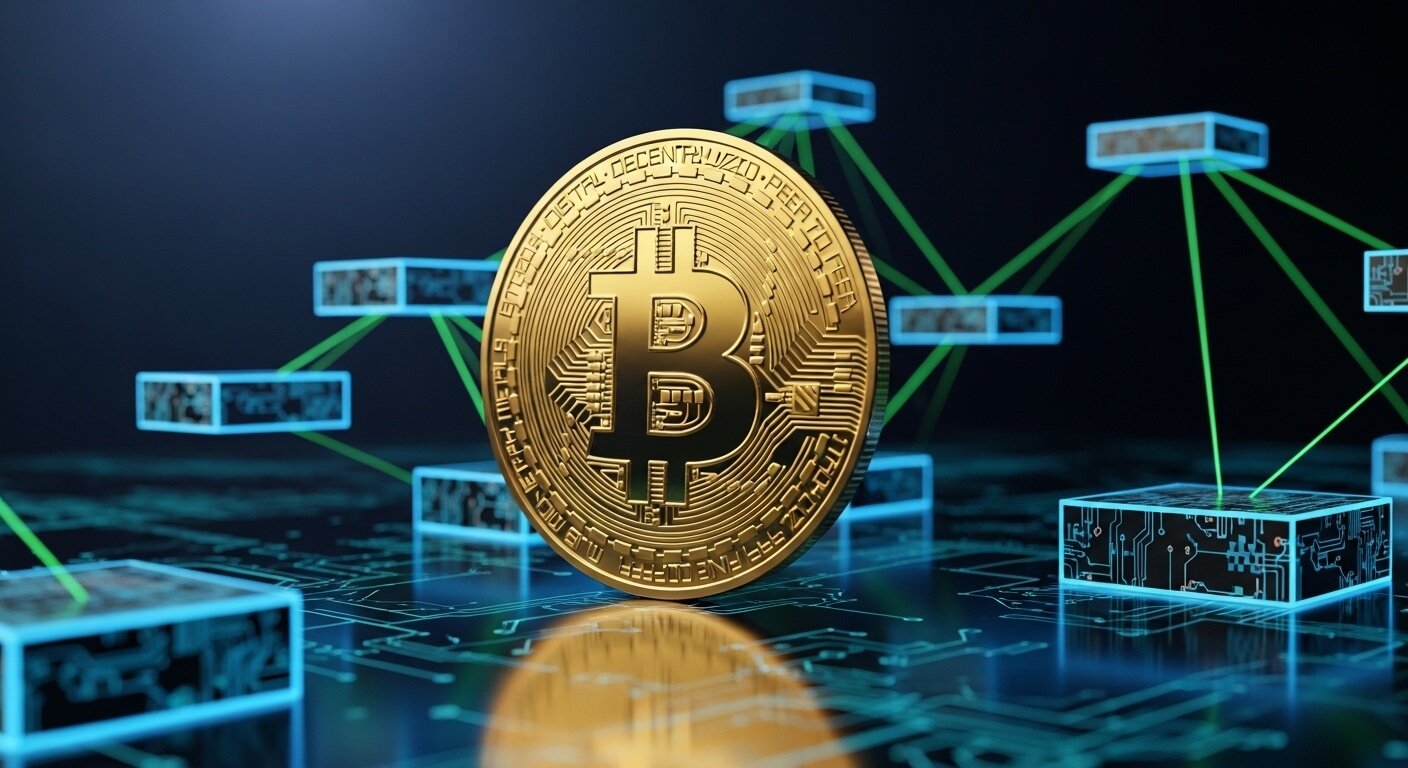
Bitcoin as a Store of Value
Many analysts compare Bitcoin to digital gold.
Like gold, Bitcoin is scarce, cannot be arbitrarily created, and operates independently of governments.
For this reason, even if Bitcoin does not completely replace traditional money in the future, it may establish itself as a global store of value.
And that process is already underway.
Future Scenarios: What Could Happen?
Let us now consider some possible future scenarios.
Scenario 1: Total Replacement
Bitcoin replaces traditional money in the future. Banks lose influence, governments restructure monetary systems, and the global economy becomes more decentralized.
Although possible, this scenario faces enormous political and economic obstacles.
Scenario 2: Hybrid Coexistence
Bitcoin and traditional money coexist, each serving different purposes within the financial ecosystem.
Many analysts consider this the most realistic outcome.
Scenario 3: Strict Regulation
Governments implement strict regulations that limit the use of Bitcoin. In this case, traditional money remains dominant.
So, Can Bitcoin Replace Traditional Money in the Future?
The most honest answer is: possibly, but not entirely.
Bitcoin can replace traditional money in the future in specific contexts, particularly as:
-
A store of value
-
Protection against inflation
-
A tool for international transfers
However, completely replacing traditional money would require profound political, economic, and structural changes on a global scale.
The Impact on Your Life
Regardless of whether Bitcoin replaces traditional money in the future, one fact is undeniable: it is already transforming the global financial landscape.
And you need to understand this transformation.
Because the sooner you understand how Bitcoin works, the better prepared you will be to make smart and strategic financial decisions.
The world is changing rapidly. Traditional money is being questioned. Technology continues to evolve. And the debate about whether Bitcoin can replace traditional money in the future will only intensify.
Final Conclusion
Can Bitcoin replace traditional money in the future?
Perhaps not completely. However, it has already demonstrated its power to challenge the traditional financial system.
Bitcoin represents financial freedom, decentralization, digital scarcity, and a revolutionary way of thinking about money.
On the other hand, traditional money still dominates the global economy, has strong government backing, and operates within a well-established infrastructure.
Therefore, the most likely outcome is a hybrid future in which Bitcoin and traditional money coexist.
One thing is certain: ignoring Bitcoin today could mean missing one of the most significant financial transformations in modern history.
And now that you clearly understand whether Bitcoin can replace traditional money in the future, the final question remains:
Will you simply observe this financial revolution… or will you choose to be part of it?